|
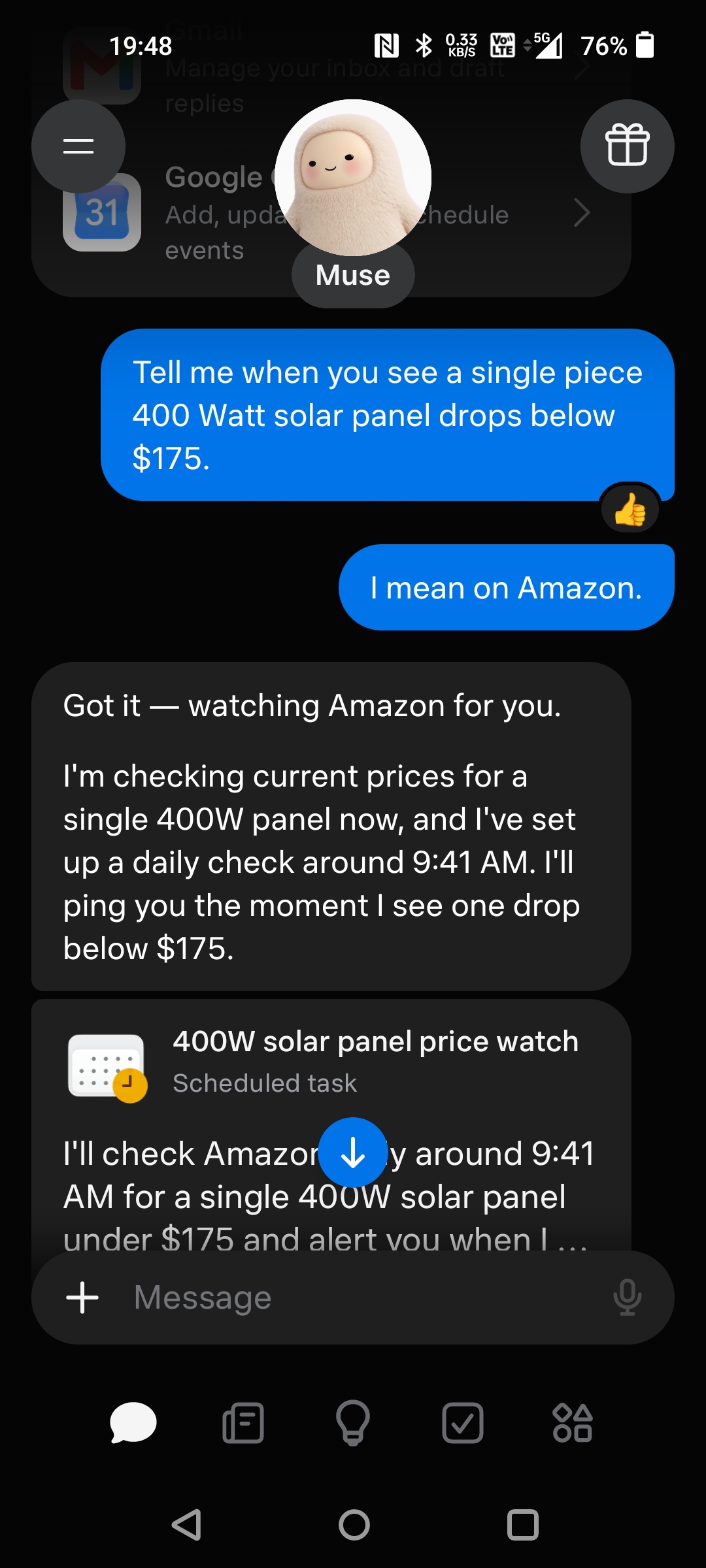
First Time Trying Muse: It Already Failed!AI assistants are supposed to make our lives easier, taking repetitive, time-consuming tasks off our plates with seamless automated magic. Naturally, when giving Muse (the AI assistant by Meta) a spin for the first time, a practical real-world test seemed appropriate: tracking prices on hardware. The goal was straightforward: set up an automated price watch for a single 400 Watt solar panel dropping below $175 on Amazon. Here is how my very first attempt at using Muse played out--and why it immediately ran into a wall. Setting Up the PromiseThe initial setup was smooth and encouraging. After specifying the product criteria and requesting that the search be scoped specifically to Amazon, Muse handled the input without hesitation: "Got it -- watching Amazon for you. I'm checking current prices for a single 400W panel now, and I've set up a daily check around 9:41 AM. I'll ping you the moment I see one drop below $175." 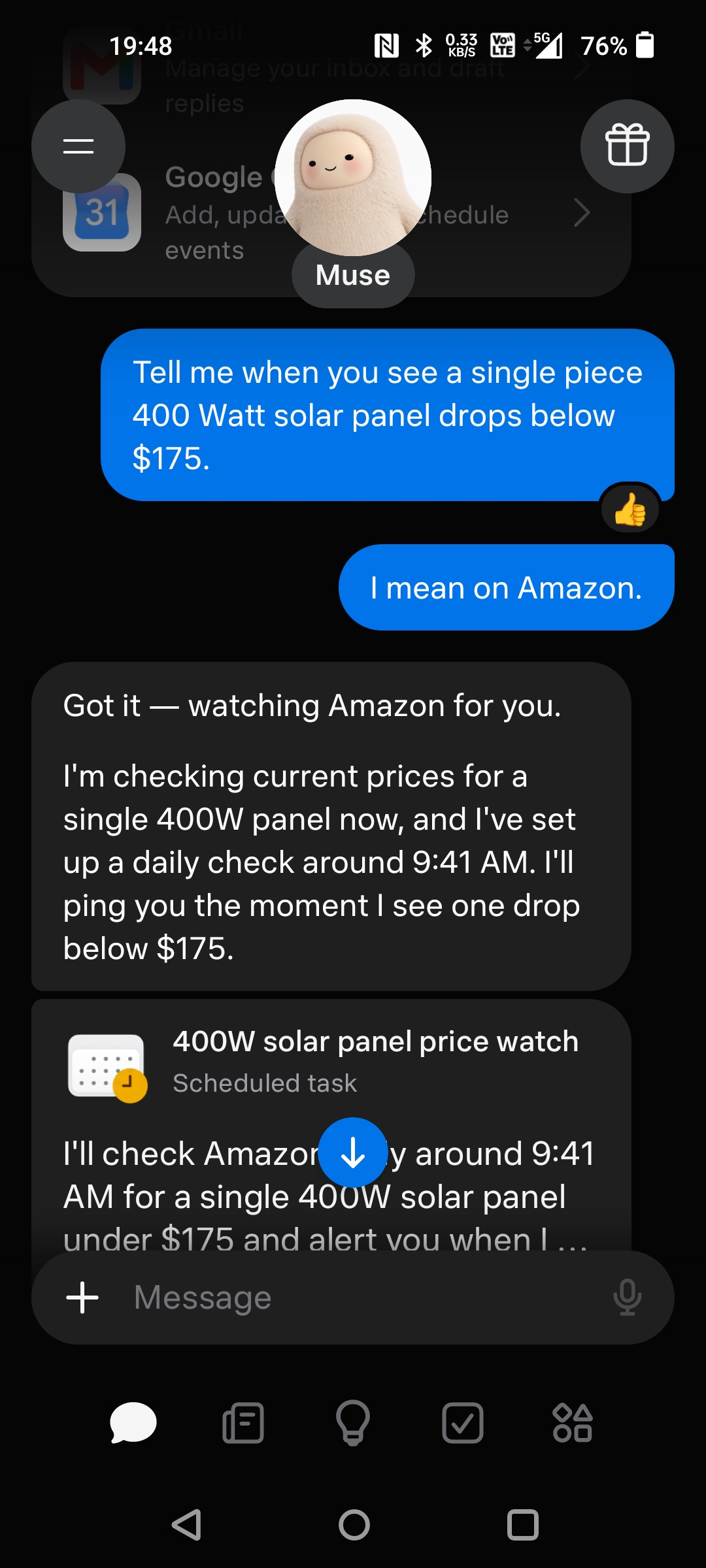
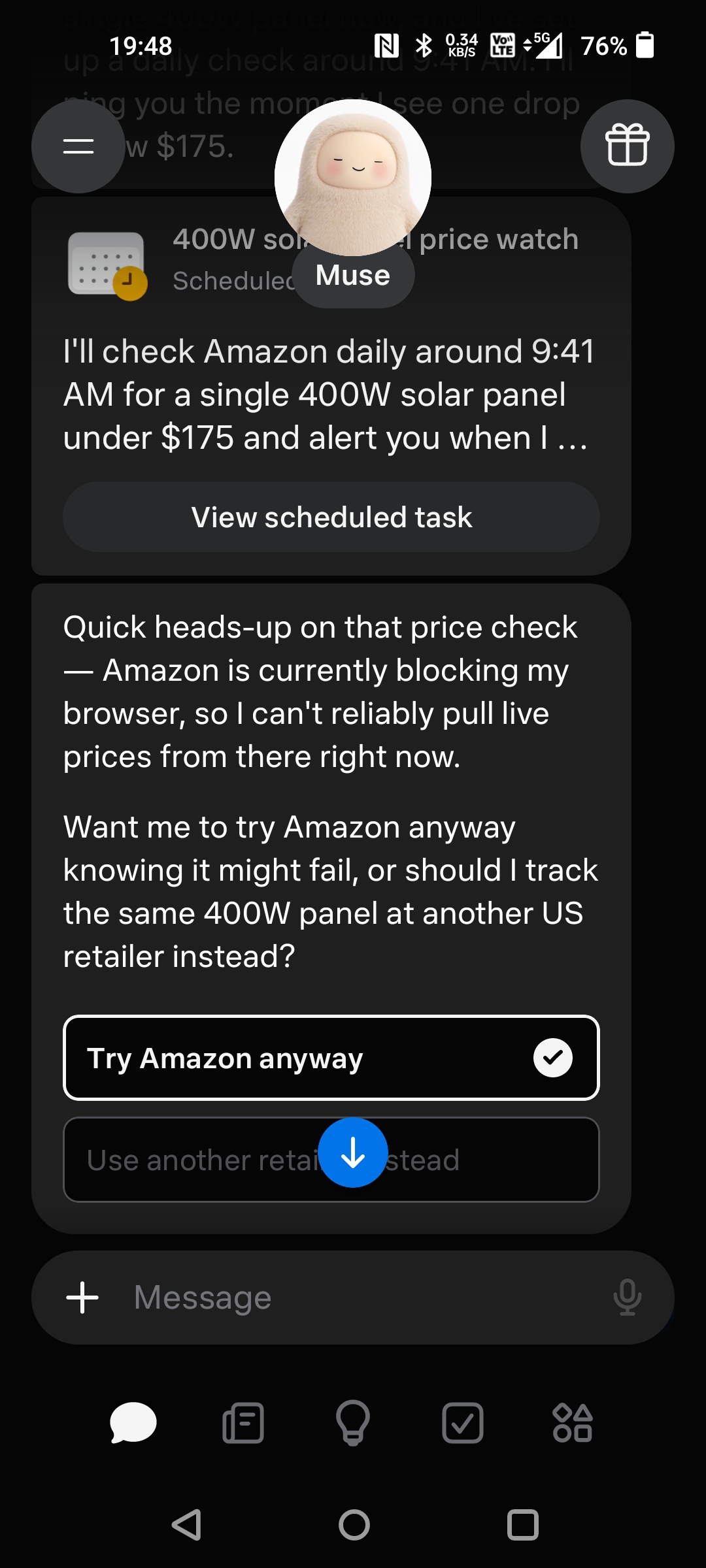
Muse automatically generated a "400W solar panel price watch" scheduled task. Up to this point, the experience felt like an ideal demo of intelligent daily task automation. The First Stumbling Block: Anti-Bot WallThe optimism was short-lived. Almost immediately after creating the scheduled task, Muse followed up with a disappointing caveat: "Quick heads-up on that price check -- Amazon is currently blocking my browser, so I can't reliably pull live prices from there right now." Because major e-commerce platforms like Amazon actively block automated scrapers and web headless browsers, Muse's background web client hit an immediate roadblock. 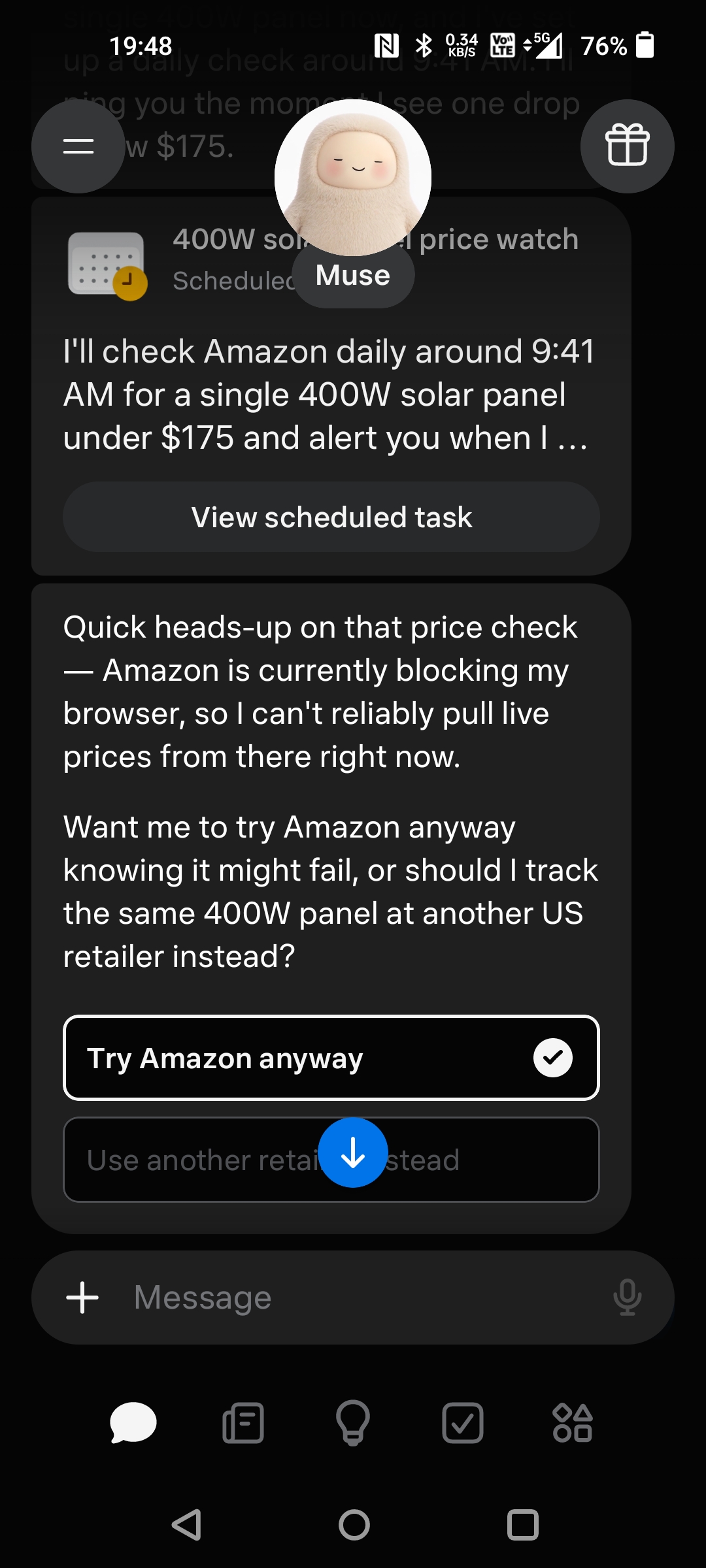
Muse presented two choices via interactive buttons:
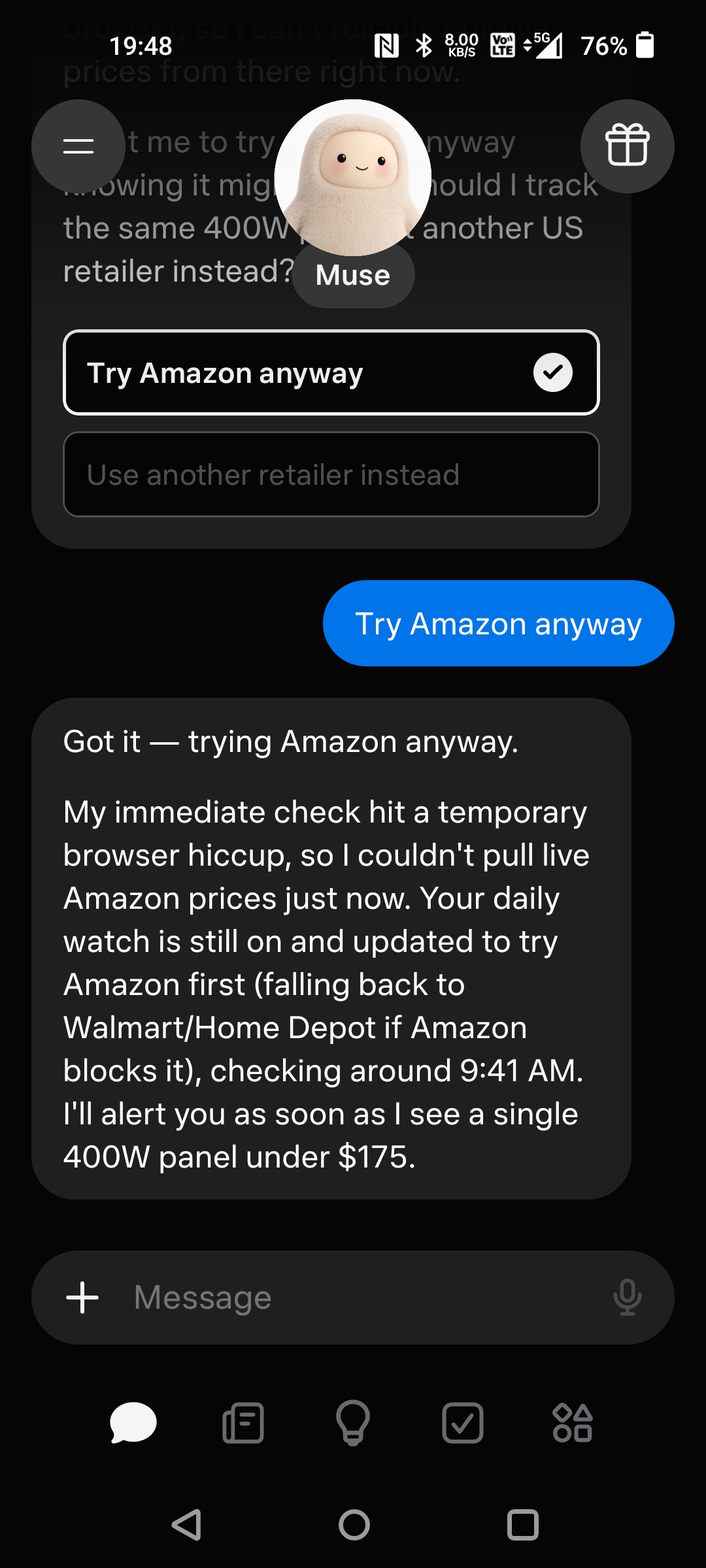
Pushing Through to the FailureChoosing to test Muse's persistence, the prompt "Try Amazon anyway" was selected. The assistant acknowledged the choice, but the instant follow-up highlighted its limitations: "Got it -- trying Amazon anyway. My immediate check hit a temporary browser hiccup, so I couldn't pull live Amazon prices just now." 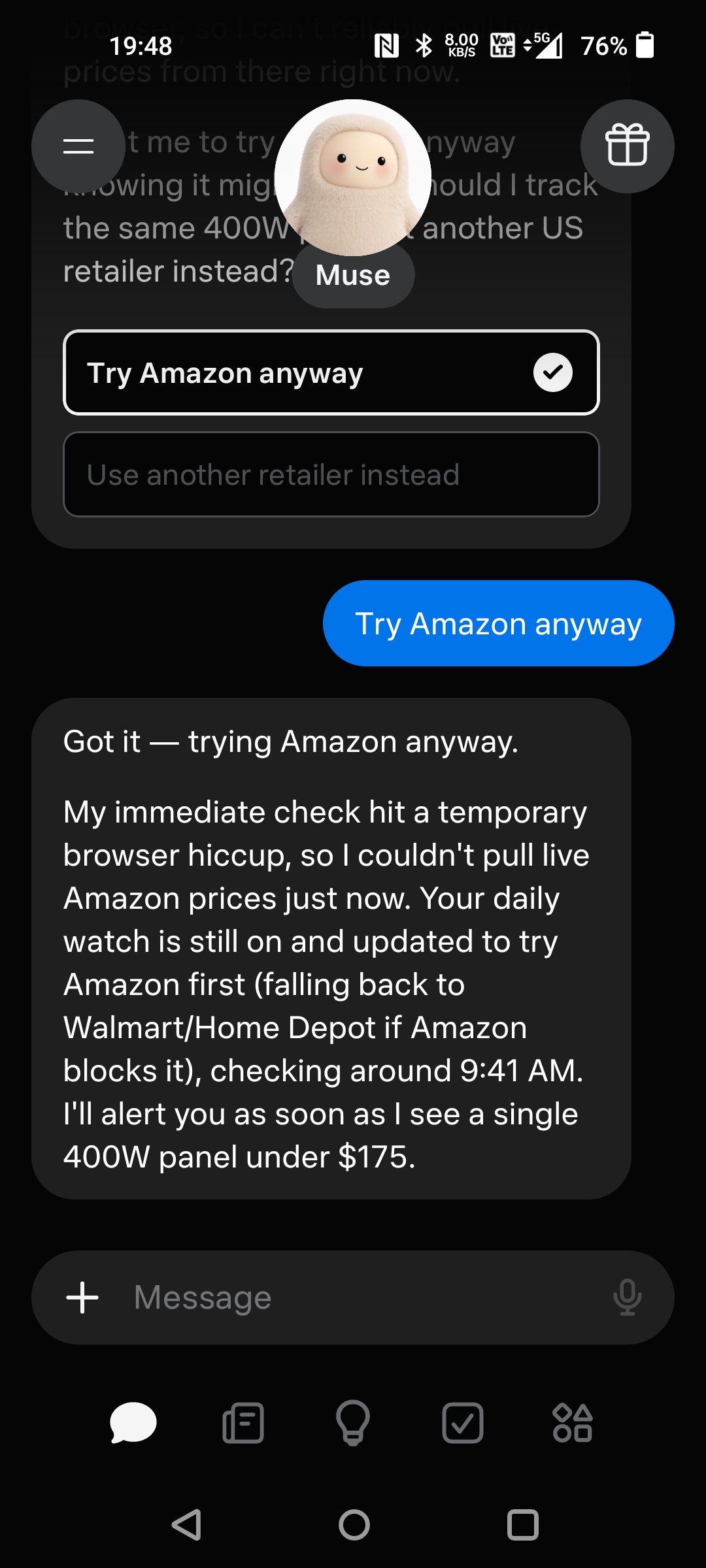
While Muse gracefully tried to save face by setting up a fallback plan---offering to check alternative retailers like Walmart or Home Depot if Amazon continued blocking it--the core task requested by the user was effectively dead on arrival. Final ThoughtsWhile Muse's user experience (UX) design is polished--featuring clean task-scheduling cards, proactive error notification, and fallback options--its actual functionality stumbled on step one. An AI price-tracking assistant is only as good as its ability to access web data. If popular storefronts like Amazon block its browser right out of the gate, even the smartest conversational assistant ends up failing its primary mission.
Attachments |
Articles
|
Wiki
121 Users Online

|
|
Copyright © 2004 - 2026. All Rights Reserved. |
|